Johnson County Health Services Building Invests in Mental Health
P1 is built to bring the facilities we serve – and the communities they serve – to life.
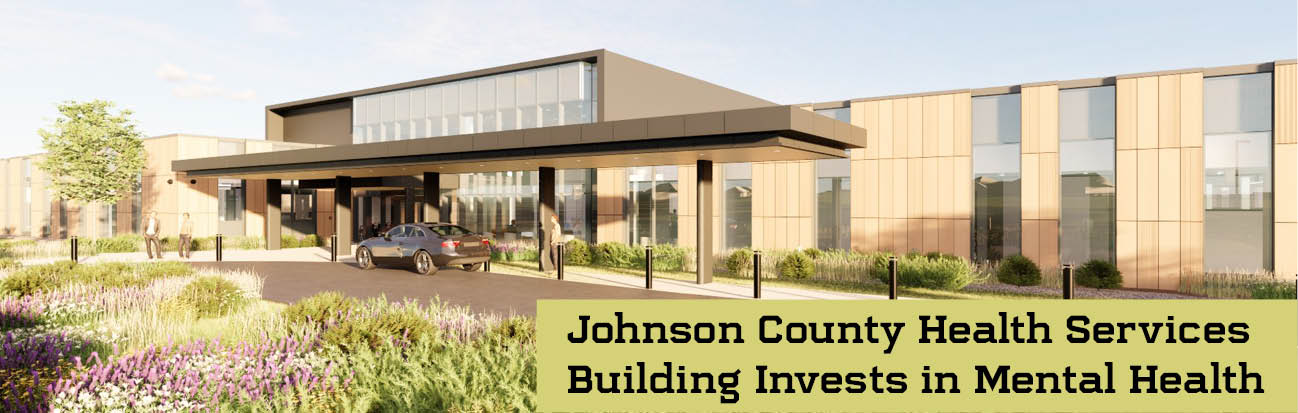
The Johnson County Health Services Building in Olathe, KS, is a great example of how P1’s work helps the communities in which we live and work.
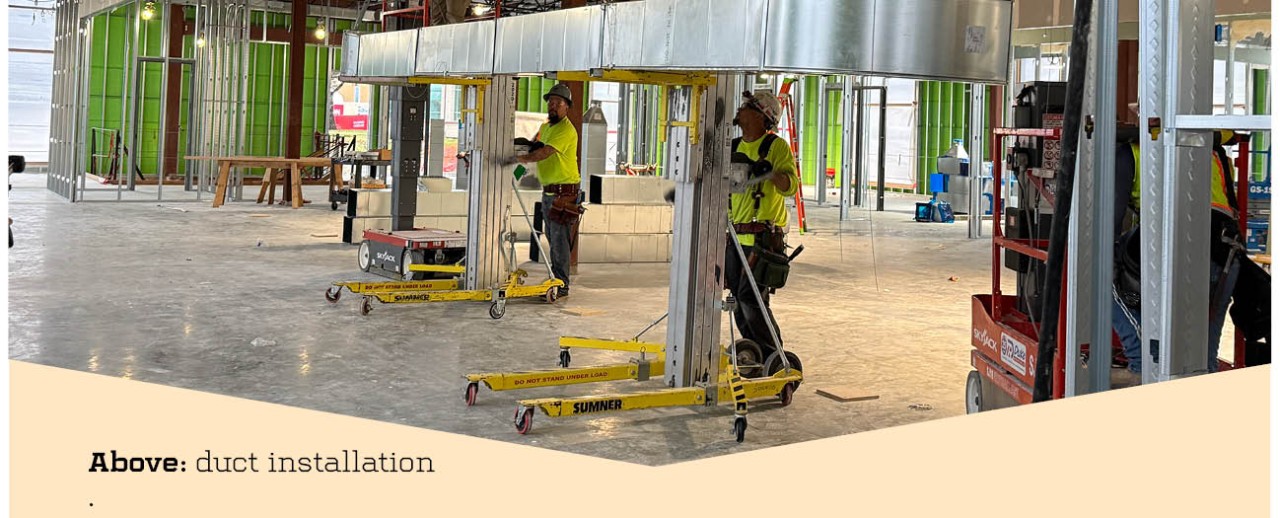
P1 is currently working on the mechanical scope of the new 140,000 sq. ft. facility, which includes HVAC, mechanical piping, and plumbing construction, along with mechanical Virtual Design & Construction, and pipe, plumbing and sheet metal fabrication.
Project Manager Lauren Titzman says the facility will bring together county services from several different county facilities under one roof: Johnson County Mental Health Center, Johnson County Department of Health and Environment, and Johnson County Aging and Human Services.
“The facility supports the community with child and adult mental health services, pharmacy, walk in clinic, emergency services, group therapy, and community events,” she said.
The facility is LEED Gold certified, a recognized standard for high-performance buildings, often used in sustainable, high-efficiency projects. Some of the enhanced energy efficient and cost-conscious sustainability features include 43,000 sq. ft. of solar panels on the roof, and a water reclamation system.
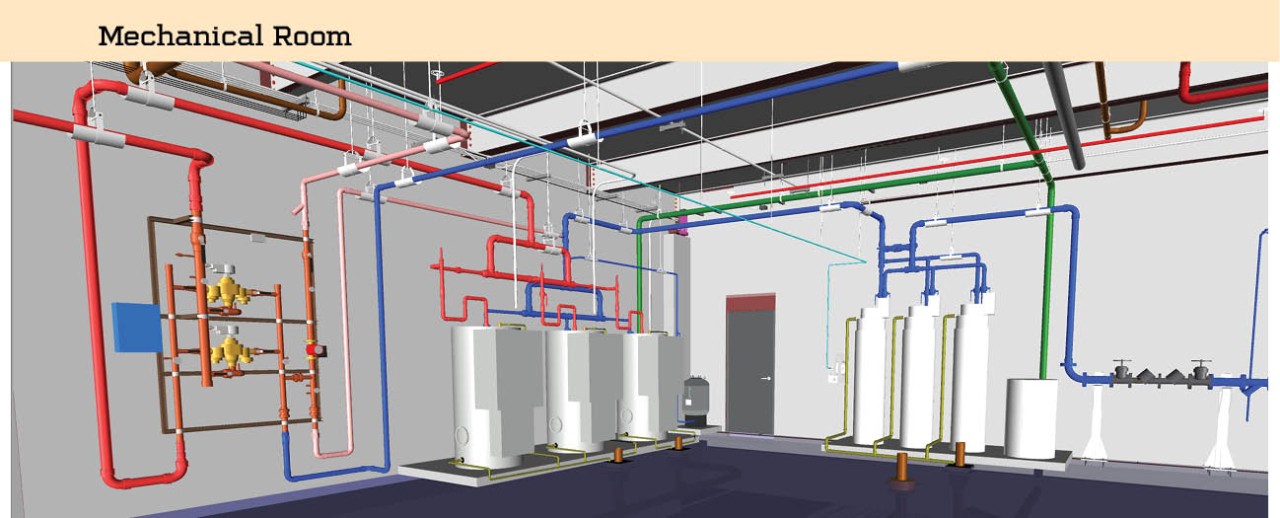
 “One of the highlights of the project is a 10k gallon water reclamation tank that collects rainwater from the roof and is used as a greywater system for toilet and urinal flushing, contributing to the LEED points,” Lauren explained.
The tank has the potential to reclaim two million gallons of water per year.
The P1 pipe fabrication shop is handling most of the piping.
“We are putting most of our mechanical piping through the fabrication shop where they are manufacturing 20' long racks to be installed in the field,” Lauren said.
“Domestic water racks are also being fabricated in 20' long racks.”
The project also includes 153 fan coil units and two DOAS (dedicated outdoor air system) units, an HVAC unit designed to provide 100% conditioned outdoor air for ventilation, separating the task of ventilation from the heating/cooling of the building spaces.
The project is slated for completion in March 2027.
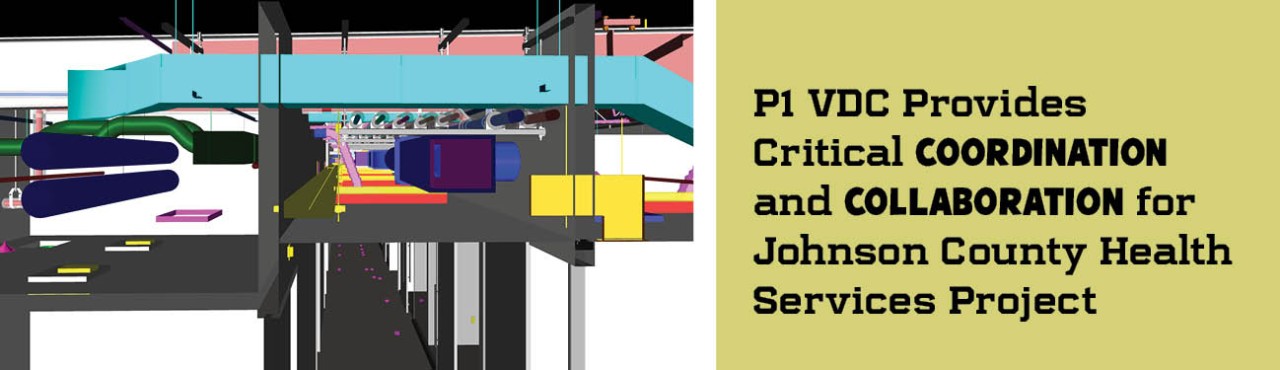
P1’s Virtual Design & Construction (VDC) division played a critical role in the Johnson County Health Services project. The work required detailed trade on trade coordination and extensive collaboration with the fabrication shop and all project partners.
According to VDC Specialist and Project Lead Richard Anderson, the project required detailed modeling and close collaboration across trades.
“Tight corridors required precise routing to maintain cable tray access and clearances, while the storm piping system added difficulty as it needed to reach the rainwater harvesting tank at its highest allowable elevation without conflicting with structural steel or ceilings,” he explained.
As design changes emerged after coordination, sheet metal detailer Zach Luthi worked with McCownGordon and Henderson Engineers to resolve ductwork and equipment changes and maintain alignment with the design intent.
Storm piping design also required refinement, and VDC Specialist Raymond Stewart was able to collaborate with the engineer to adjust slopes within plumbing code allowances, enabling the piping to clear structural beams.
The VDC team held bi weekly coordination meetings to stay ahead of the aggressive schedule and weekly internal meetings with the project manager, foreman, and fabrication shop to align on priorities and upcoming needs.
“This consistent communication ensured timely delivery of all VDC deliverables, including shop drawings, hanger drawings, supplemental steel drawings, bills of materials, and Trimble layout points,” Richard said.
He notes that early collaboration with the P1 fabrication pipe shop allowed the team to identify opportunities for multi trade rack fabrication, enabling the production of 20 foot pipe and domestic water racks that streamlined installation once construction progressed into the field.
A few months after coordination was completed, P1 met with McCownGordon and the trade partners to review lessons learned and identify opportunities to improve the coordination process on future projects.
“We learned that having the design team actively participate in coordination meetings helped expedite decision making and reduced RFI turnaround times,” Richard said.

From bringing the structural fabricator into the process earlier to help resolve support related questions sooner to maintaining a consistent trade hierarchy for system placement to avoid unnecessary conflicts – P1 VDC demonstrated both technical excellence and the power of partnership.